
- Flooring
My Hardwood Floors Are Gapping: What’s Causing It and What Red Deer Homeowners Can Do
October 6, 2026
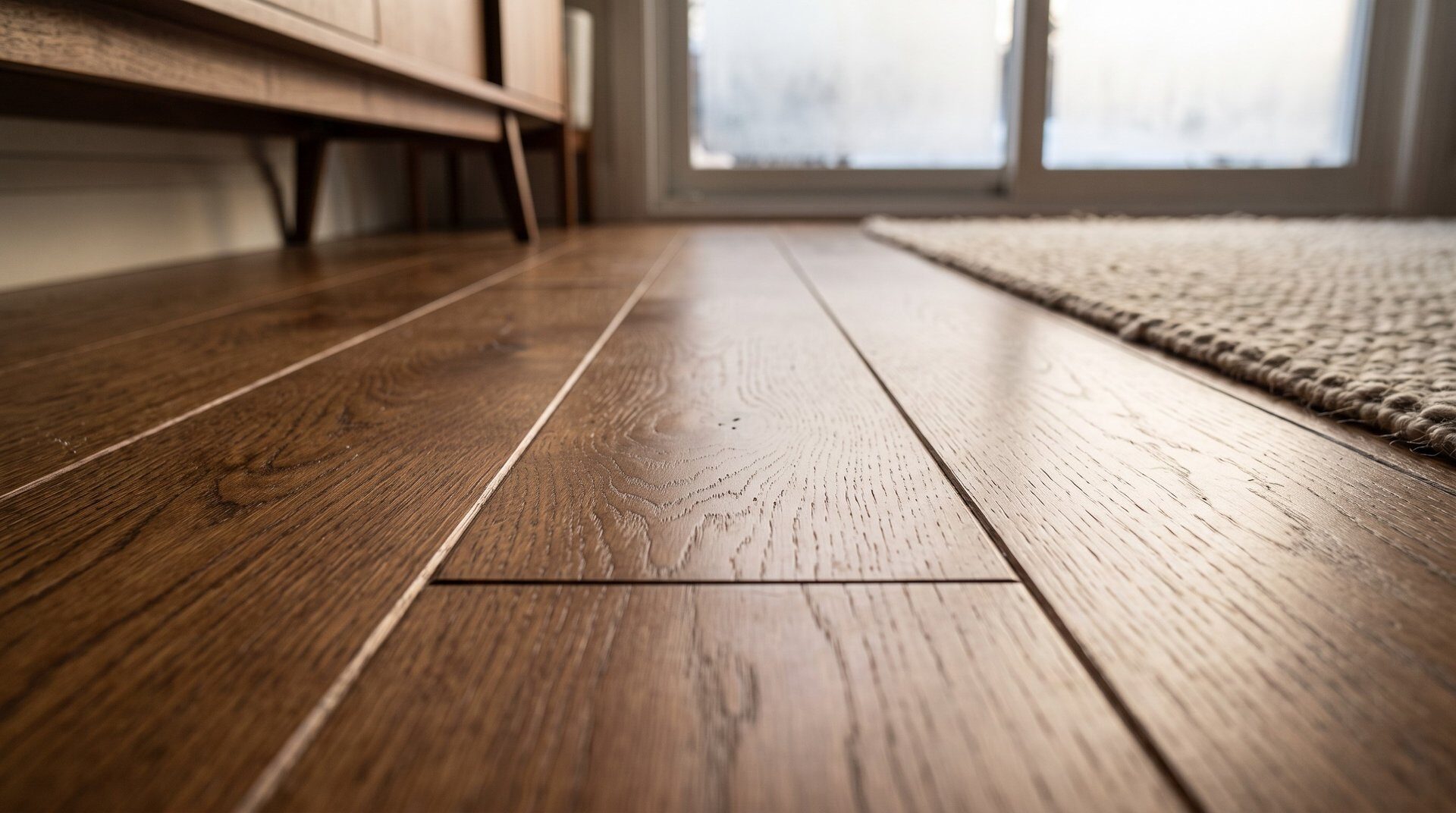
February in Red Deer. The furnace has been running since October, the air inside the house is bone-dry, and you notice it for the first time: thin gaps between your hardwood planks that weren’t there last summer. Maybe a millimetre wide. Maybe a bit more. You’re not imagining it, and your floor is not falling apart. What you’re seeing is your hardwood floor doing exactly what wood does when the air around it gets very dry.
That said — not all gaps are the same. Some are normal seasonal movement that will reverse itself in spring. Others are a signal that something went wrong during installation, or that the floor was the wrong product for the environment. Knowing which situation you’re in is the difference between waiting it out and picking up the phone.
Our team at Central Alberta Tile One fields these calls every winter. Here’s how to diagnose what’s happening with your floor, and what to do about it. You can also reach us directly at 403-346-7088 if you’d rather just talk it through.
Why Alberta Winters Are Hard on Hardwood Floors
Wood is hygroscopic — it absorbs and releases moisture from the surrounding air constantly. In summer, Alberta’s humidity is moderate and hardwood planks sit at a comfortable moisture content. Come winter, the story changes. Red Deer’s outdoor air is dry to begin with, and running a forced-air furnace for six months drives indoor relative humidity down further. On the coldest stretches, interior RH can fall below 20%.
The National Wood Flooring Association recommends maintaining indoor relative humidity between 35% and 55% year-round to protect hardwood floors. When RH drops below that range, wood loses moisture content and physically shrinks across its width. The result: gaps between planks.
This is not a defect. It is wood behaving as wood behaves. A well-installed hardwood floor in a Red Deer home will show some seasonal gapping every winter. The question is whether what you’re seeing is within that normal range, or something else.
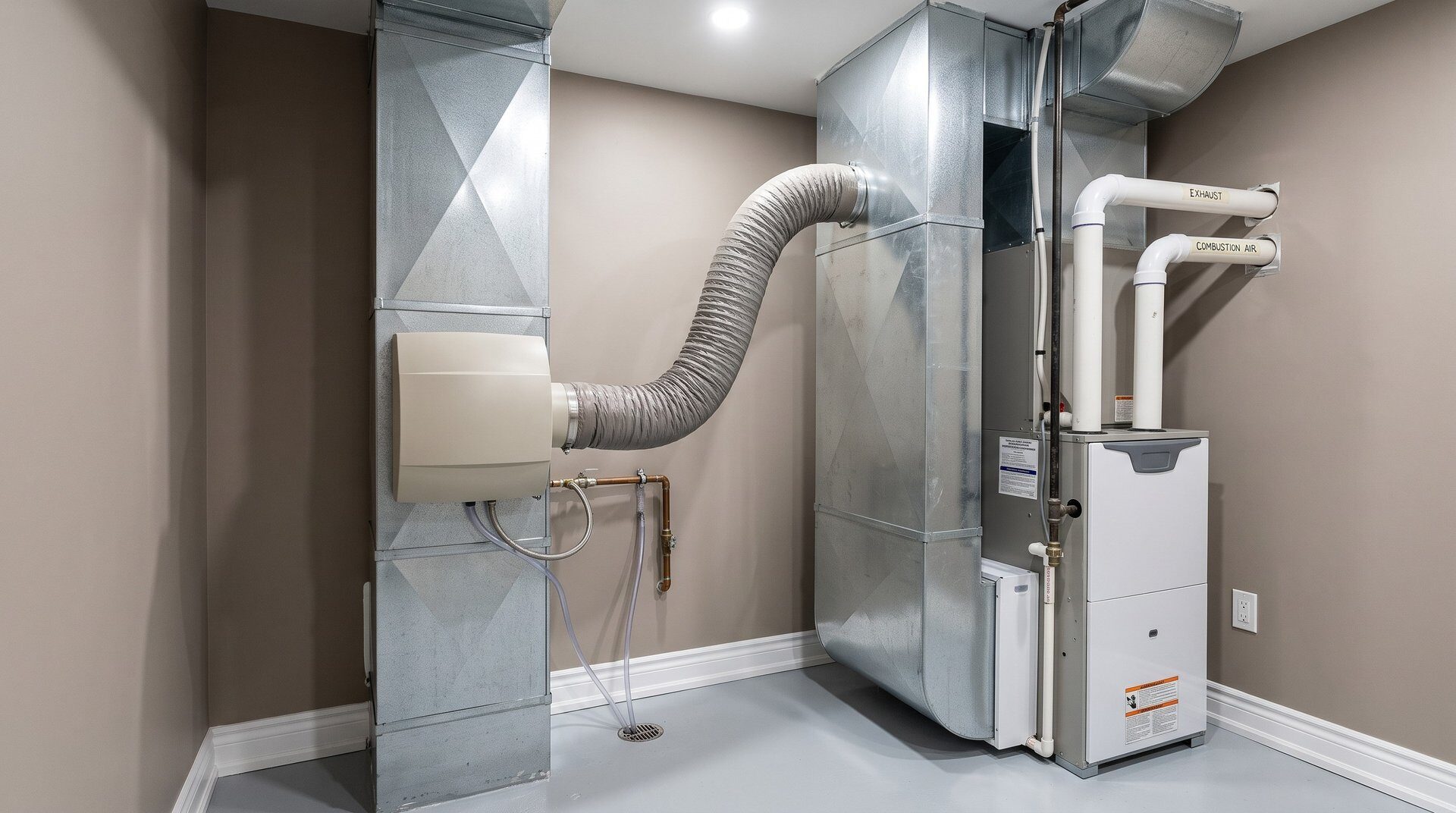
Pro Tip from the Central Alberta Tile One team: The cheapest tool a hardwood floor owner can buy is a digital hygrometer — about $20 at any hardware store. Place it in the room with your floor and check it regularly through winter. If your indoor RH is consistently below 30%, you’re stressing your floor. A whole-home humidifier connected to your HVAC is the most effective solution. Point humidifiers in a single room don’t move the needle enough for a full hardwood floor.
Normal Seasonal Gapping vs. a Real Problem: How to Tell the Difference
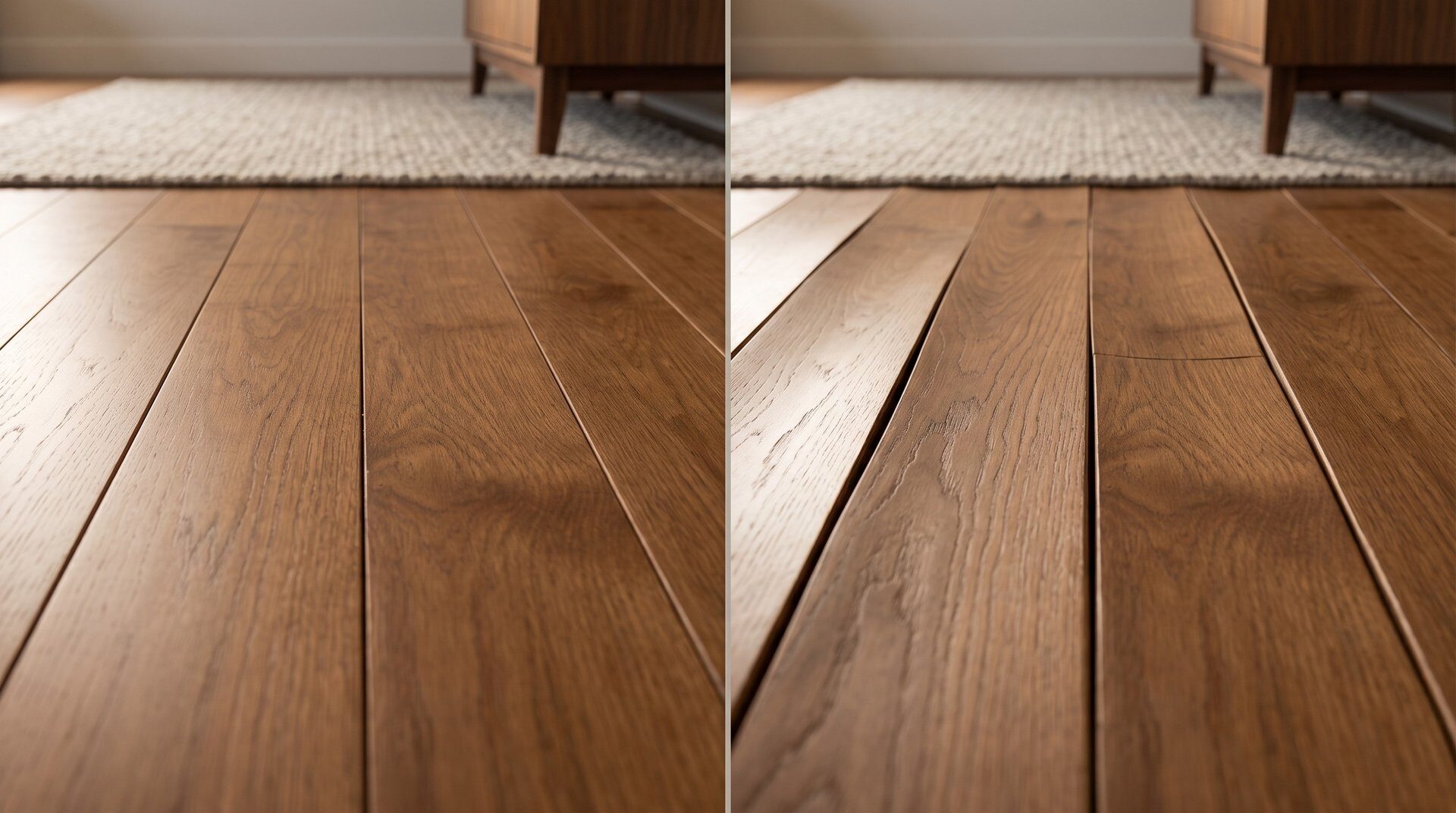
Seasonal gapping closes. That’s the key test. If your gaps open in January and are mostly or fully closed by May or June when indoor humidity recovers, you have a normal seasonal pattern. The floor is doing its job. Manage the indoor humidity and the issue will stay within acceptable limits.
Real problems look different. Gaps that remain open through summer. Gaps that are uneven — wide in some areas, normal in others. Planks that have cupped or crowned along the edges. Gaps that appeared in the first year after installation. End-grain splits. These are not seasonal movement. They are signs of installation error, a moisture problem in the subfloor, or the wrong product for the conditions.
Here is the honest version: if your floor was installed over a subfloor that wasn’t moisture-tested first, or if the hardwood wasn’t allowed to acclimate in your home before installation, gapping problems often show up in the first heating season. A good installer tests the subfloor before laying anything. If yours didn’t, that conversation is worth having.
“We went to Alberta Tile One to talk about upgrading our kitchen. We met with Kinga and she helped us pick out colours and match everything to the cabinets that we wanted to keep. Alberta Tile One coordinated with the granite company and the company that we got new sinks from so that we only had to communicate with one company. They planned everything, booked all the appointments and it all went very smoothly.”
Stefanie T., Red Deer | Kitchen renovation, Central Alberta Tile One
What Not to Do When You See Gaps
Do not caulk them. This is the most common and most damaging DIY response to hardwood gaps. Silicone caulk, acrylic caulk, or wood filler shoved into seasonal gaps will trap debris, prevent the natural expansion that happens every spring, and in some cases cause the planks to buckle when they try to close back up. If the gap closes seasonally, filling it is actively making things worse.
Do not sand and refinish while the floor is at its driest. A floor sanded in February at peak gap width will be too wide when it comes back together in spring. Refinishing should happen when humidity has recovered and the floor has returned to its summer dimensions.
Do not assume the worst based on appearance alone. Thin, uniform gaps across the field of a floor in January are almost certainly seasonal. Call a flooring professional, describe what you’re seeing, and get a second opinion before spending money on anything.
“The call we dread getting in spring is someone who caulked their hardwood gaps in January and now the planks are buckling because there’s nowhere for the wood to go. A seasonal gap needs air, not filler. It sounds counterintuitive, but that gap is your floor telling you it’s working the way it should.” — Shannon Moench, Owner, Rave Design Showroom
What You Can Do: Managing the Problem Long-Term
The most effective thing a Red Deer hardwood floor owner can do is manage indoor humidity. A whole-home humidifier tied into your HVAC system maintains consistent RH across your entire home rather than just one room. The target is 35–55% year-round. If you can hold that range through winter, seasonal gapping becomes minimal and the floor stabilizes.
If gapping has been persistent and severe across multiple winters, it may be worth getting the floor professionally assessed. An experienced installer can tell you whether the gapping pattern suggests a moisture problem in the subfloor, an installation issue, or simply an exceptionally dry home that needs humidity management. That diagnosis changes what the right fix looks like.
In cases where a floor genuinely cannot be managed — older solid hardwood in a home without a humidifier, a very dry climate zone, a basement installation that shouldn’t have been hardwood in the first place — the conversation shifts to whether a more dimensionally stable product like engineered hardwood or LVP makes more sense going forward. That’s not a failure. That’s the right call for the conditions. Read our full comparison at raveshowroom.ca/hardwood-vs-lvp-flooring-red-deer/ if you’re weighing that decision.
“Great flooring and great teamwork help us build outstanding homes. With the service and expertise we get from Central Alberta Tile One, our team won an Award of Excellence in Housing. More importantly, they help us offer our clients a better product.”
Terry Loewen, Builder, Red Deer area | Central Alberta Tile One
Frequently Asked Questions
Are gaps in hardwood floors in winter normal in Alberta?
Yes, in most cases. Hardwood expands and contracts with changes in indoor relative humidity. In Red Deer’s winters, when forced-air furnaces run continuously and indoor RH drops significantly, hardwood planks lose moisture and shrink across their width, creating gaps. If those gaps close again in spring and summer, it is normal seasonal movement. Maintaining indoor RH between 35% and 55% minimizes the effect.
How big of a gap in hardwood floors is too big?
Gaps of 1 to 2mm that open and close seasonally are within the normal range for solid hardwood in Alberta’s climate. Gaps wider than 3mm, gaps that do not close by summer, or gaps that are uneven across the floor are worth having assessed by a flooring professional. These patterns can indicate subfloor moisture, improper installation, or a product that was not suited to the conditions.
Can I fill the gaps in my hardwood floor with caulk or wood filler?
No. Filling seasonal gaps with caulk or wood filler prevents the floor from expanding naturally in spring and can cause planks to buckle. If your gaps are seasonal, leave them alone and manage indoor humidity instead. If the gaps are a sign of an installation problem or are not closing seasonally, get a professional assessment before attempting any repair.
Will a humidifier fix my gapping hardwood floors?
A whole-home humidifier connected to your HVAC system is the most effective intervention for hardwood floors gapping due to low winter humidity. It maintains consistent RH across the entire home rather than just one room. Point humidifiers placed in a single room are rarely sufficient for a full hardwood floor. If your indoor RH stays consistently above 35% through winter, seasonal gapping will be significantly reduced.
When should I call a flooring professional about my hardwood gaps?
Call a professional if your gaps are wider than 3mm, if they are not closing by early summer, if the planks have cupped or crowned along the edges, if the gapping appeared in the first year after installation, or if you see end-grain splits in the planks. These patterns go beyond normal seasonal movement and warrant a proper diagnosis before any repair is attempted.
Not Sure What You’re Looking At? We’ll Tell You Straight.
Before you panic, or before you spend money on a repair you might not need, call us. Our team at Central Alberta Tile One has been assessing and installing hardwood floors in Red Deer and Central Alberta for over 25 years. We can often tell you over the phone whether what you’re describing sounds like seasonal movement or something worth addressing.
If it does need a look, we’ll come out and give you an honest assessment — not a sales pitch for a floor you don’t need yet. That’s how we’ve built relationships here since 1999.
Central Alberta Tile One | #9 – 7619 50 Ave, Red Deer, AB | 403-346-7088 | raveshowroom.ca/services/
You Might Also Like
-

- Flooring
October 14, 2026
Carpet vs. Hard Flooring in Red Deer Bedrooms: What Families Are Choosing in 2026
-
- Flooring
October 8, 2026
Tile Flooring in Red Deer: Where It Makes Sense (and Where Homeowners Regret It)
-
- Flooring
September 15, 2026
LVP Flooring in Red Deer: What to Look for Before You Buy (and What the Spec Sheet Won’t Tell You)