
- Flooring
Tile Flooring in Red Deer: Where It Makes Sense (and Where Homeowners Regret It)
October 8, 2026
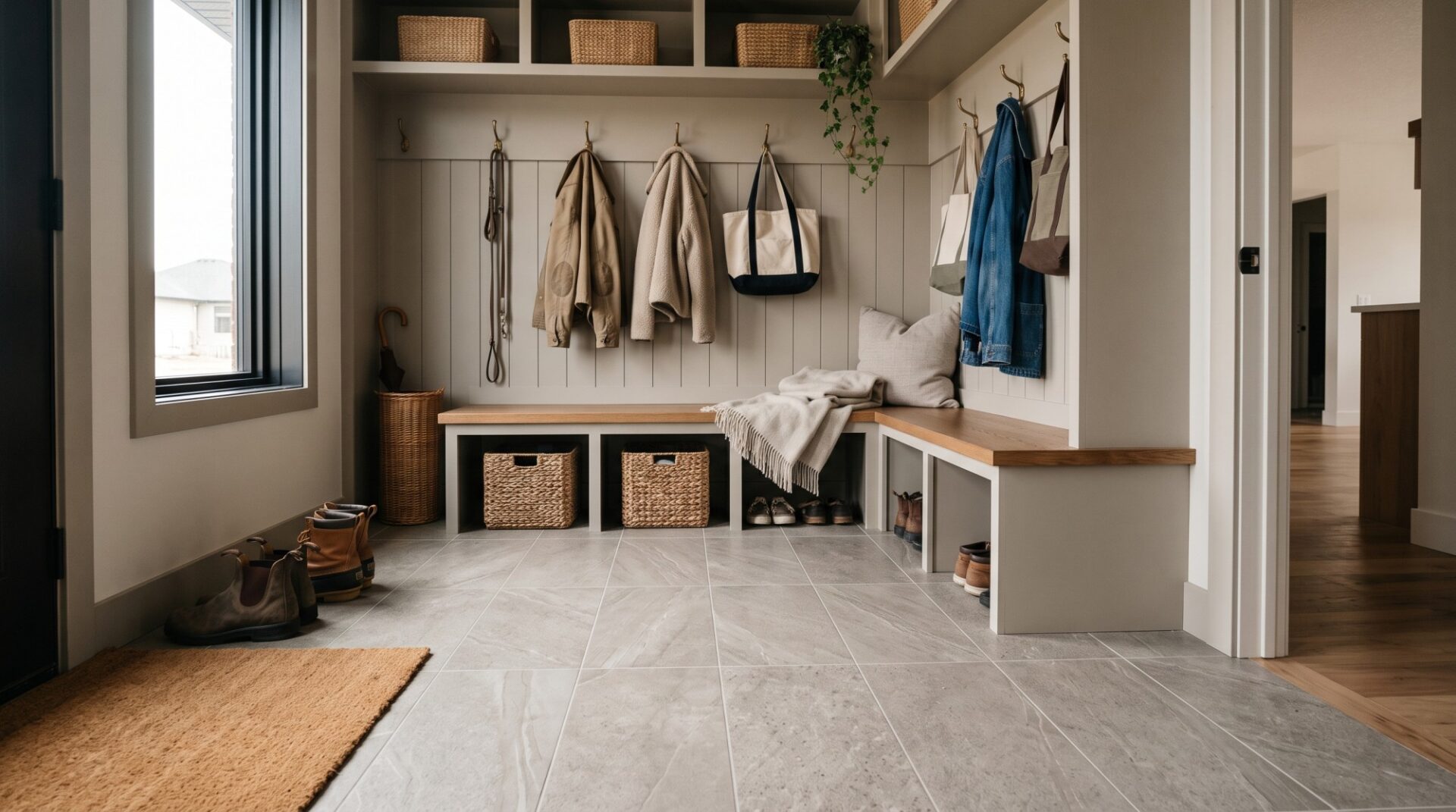
Tile flooring gets recommended a lot. Walk into almost any home renovation conversation and someone will suggest tile for the bathroom, tile for the mudroom, tile for the kitchen, tile for the entryway. And tile is genuinely excellent in the right application. The problem is that ‘the right application’ has some real limits that don’t always come up in the showroom.
We’ve been installing tile in Red Deer and Central Alberta homes since 1999. We’ve seen tile done beautifully in spaces where it performs for decades. We’ve also been called in to assess cracked grout, loose tiles, and failing installations that happened because tile went somewhere it shouldn’t have, or because the subfloor wasn’t prepared to the standard tile actually requires.
This guide gives you the honest version: where tile excels, where you’ll likely wish you’d chosen differently, and what it takes to make a tile installation that holds up in an Alberta home long-term. Call us at 403-346-7088 or visit raveshowroom.ca/product/flooring/ to explore tile options.
Where Tile Is Genuinely the Right Answer
Bathrooms and Wet Zones
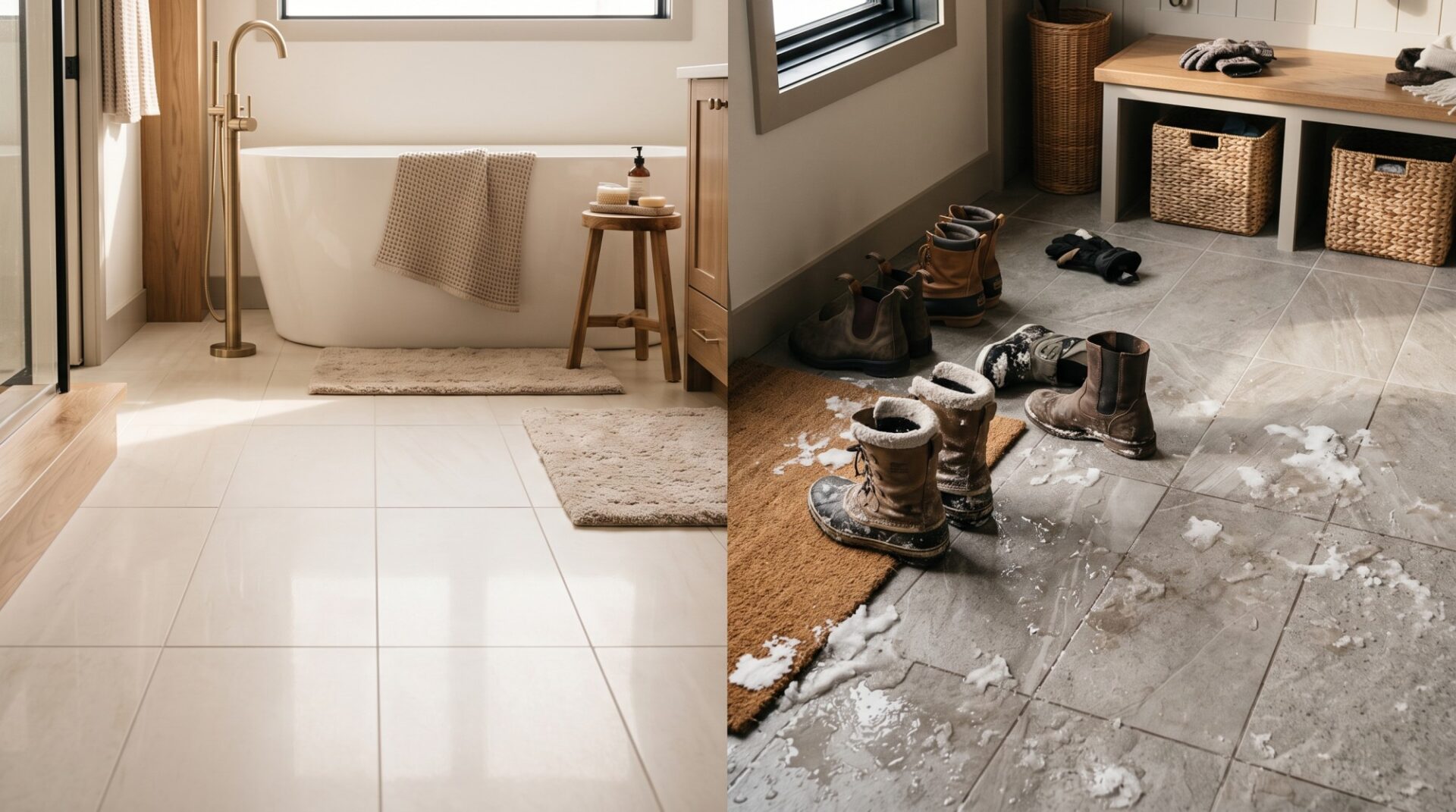
Tile is the correct choice for shower walls, shower floors, tub surrounds, and bathroom floors. Nothing else performs as well in a constantly wet environment. Properly installed with the right waterproofing membrane behind it, porcelain or ceramic tile in a bathroom will outlast virtually any alternative. LVP is waterproof on the surface, but tile with a waterproofing system behind it is waterproof all the way through the wall or floor assembly. That distinction matters in a shower.
Mudrooms and Entryways
Red Deer homeowners who have tiled their mudrooms rarely regret it. Snow, road salt, muddy boots, and wet winter gear hit the mudroom floor harder than any other surface in the house. Tile cleans up with a mop and doesn’t trap salt the way carpet does or show scratch marks the way some LVP can after years of abrasive grit. For a family that spends six months tracking Alberta winter into the house, tile in the mudroom is a practical decision.
Kitchens with In-Floor Radiant Heat
Tile is the most efficient conductor of radiant heat of any flooring material. If you have or plan to add in-floor heat in a kitchen or bathroom, tile is the clear performance winner. It heats quickly, holds temperature well, and the warmth underfoot changes the feel of a tiled kitchen entirely. Just note that installation over a heated slab requires specific materials and methods, including an uncoupling membrane like Schluter DITRA to manage thermal expansion. That’s not optional — it’s what prevents tiles from cracking as the slab heats and cools.
Commercial Spaces and High-Traffic Areas
Porcelain tile is harder and denser than most flooring alternatives. For retail, hospitality, office lobbies, or rental properties that see heavy traffic, a quality porcelain tile installation with proper joint sizing and the right grout will outperform carpet or LVP on durability over a 10 to 20 year timeframe. Central Alberta Tile One has done commercial tile projects throughout Red Deer for over 25 years.
“My experience working with Krista on a design for a renovation was amazing. Her expertise and her suggestions were perfectly balanced with my existing home set up. She was involved throughout the project. Tile One has great selection and quality products. The result is a beautiful updated home!!!”
Raylene C., Red Deer | Renovation, Central Alberta Tile One
Where Homeowners Regret Choosing Tile
Here’s the part that doesn’t make it into most tile guides.
Main Floor Living Areas Without Radiant Heat
Tile over a wood subfloor in a Red Deer living room, without in-floor heat, is cold, hard, and acoustically unforgiving. Some homeowners love the look and accept the tradeoffs. Many others install it, spend one Alberta winter walking on it barefoot, and wish they had gone with a warmer option. Engineered hardwood, LVP with cork underlayment, or even a well-chosen laminate will be more comfortable underfoot in a main living space that doesn’t have radiant heat beneath it.
Basements with Subfloor Flex or Moisture Risk
Tile requires a rigid, stable substrate. The deflection limit for a tile installation is L/360, meaning the subfloor can flex no more than the span divided by 360 under load. Many basement wood subfloor systems in older Red Deer homes don’t meet that standard without reinforcement. A subfloor that passes the flex test for LVP or hardwood will still fail for tile. If the subfloor moves even slightly, grout cracks. Tiles loosen. The installation fails.
Add the moisture dimension and basements become genuinely risky for tile unless the installation is done correctly. In most Central Alberta basement situations, LVP is a more forgiving and moisture-tolerant choice. If you want tile in a basement space, the subfloor preparation conversation has to happen first.
DIY-Installed Tile on an Unprepared Subfloor
Tile is not a forgiving product to install. It requires a flat subfloor, the right thinset for the tile type and substrate, proper joint sizing, appropriate grout selection, and correct sealing. We see failed DIY tile installations regularly, and the pattern is almost always the same: a homeowner who is skilled at other home projects underestimates how precisely the substrate has to be prepared. The Tile Council of North America publishes detailed installation standards that professional installers follow — and for good reason.
“Tile done right is one of the best investments you can make in a Red Deer home. Tile done wrong costs twice as much to fix as it would have cost to do right the first time. The subfloor preparation is 80 percent of the job — the tile itself is almost the easy part.” — Dean Gillespie, Owner, Central Alberta Tile One
What Good Tile Installation Actually Requires in Alberta
The Tile Council of North America (TCNA) sets the installation standards that professional tile contractors work to. For a homeowner evaluating whether a tile quote is legitimate, these are the questions worth asking.
First: has the subfloor been tested for deflection and flatness? For tiles 15 inches or larger (which covers most large-format porcelain), the TCNA standard is no more than 1/8 inch variation over 10 feet. Most subfloors in existing homes need some preparation work to meet that spec. An installer who doesn’t mention subfloor prep before quoting tile is missing a step.
Second: is an uncoupling membrane being used? Over heated slabs, over concrete with any moisture risk, or over wood subfloors that have any movement, an uncoupling membrane decouples the tile from the substrate and absorbs the minor movement that would otherwise crack grout or pop tiles. It adds cost. It also adds 10 to 20 years of reliable performance.
Third: what grout are they specifying? Unsanded grout for joints under 1/8 inch, sanded grout for wider joints. Epoxy grout for wet areas where low-maintenance performance is the priority. Cement-based grout needs to be sealed. Asking these questions tells you immediately whether the installer knows what they’re doing.
Pro Tip from the Central Alberta Tile One team: When selecting tile for a floor, check the PEI (Porcelain Enamel Institute) rating on the tile specification sheet. PEI 0 and PEI 1 tiles are wall tiles only — they are not rated for foot traffic. For residential floor use, look for PEI 3 or higher. For heavy-traffic commercial floors, PEI 4 or 5. Buying wall tile for a floor is one of the most common and most expensive tile spec errors we see.
“Excellent professional service. Once they start they don’t let up until the job is done, done quickly and done right.”
Red Deer Homeowner | Flooring installation, Central Alberta Tile One (via TrustedPros)
Frequently Asked Questions
Is tile a good choice for a Red Deer kitchen floor?
It depends on whether you have or plan to add in-floor radiant heat. With radiant heat, tile is an excellent kitchen floor — warm, durable, easy to clean. Without heat, tile over a wood subfloor in a kitchen will be cold underfoot through Alberta’s long winters. Many Red Deer homeowners with no radiant heat find LVP or engineered hardwood a more comfortable kitchen floor choice while still offering strong durability and easy cleaning.
What is the PEI rating and why does it matter for floor tile?
The PEI (Porcelain Enamel Institute) rating measures a tile’s resistance to surface abrasion from foot traffic. PEI 0 and 1 are wall tiles and should never be used on floors. PEI 3 is the minimum for residential floor use. PEI 4 and 5 are rated for heavy residential and commercial traffic. Always confirm the PEI rating before purchasing floor tile — wall tile looks identical in most showrooms but will wear through quickly underfoot.
Why does my tile grout keep cracking?
Cracking grout is almost always a subfloor problem, not a grout problem. The most common causes are a subfloor that flexes more than tile installation allows (L/360 deflection limit), thermal expansion and contraction in a heated slab without an uncoupling membrane, and improper joint sizing that doesn’t allow for movement. If your grout is cracking repeatedly, the underlying issue needs to be addressed before re-grouting will hold.
Does tile grout need to be sealed?
Yes. Cement-based grout is porous and will absorb stains, moisture, and bacteria without a sealer. After installation, grout should be sealed with a penetrating grout sealer and resealed periodically — typically every one to two years in high-use areas like kitchens and bathrooms. Epoxy grout is an alternative that does not require sealing and is particularly well-suited to wet areas and countertop applications.
Can tile be installed directly over an existing tile floor?
Sometimes, but with important conditions. The existing tile must be firmly bonded with no hollow or loose tiles, the subfloor must be able to handle the added weight, and the height transition to adjacent flooring must be manageable. In most cases, removing old tile and starting with a properly prepared substrate is the better approach. Tiling over existing tile adds height, can stress grout joints, and hides any problems in the layer below that will eventually affect the new installation.
Thinking About Tile for Your Next Project?
Our tile team at Central Alberta Tile One has been doing this in Red Deer and Central Alberta since 1999. We know the subfloor conditions common in local homes, the products that hold up in Alberta’s climate, and the installation methods that make the difference between a floor that lasts 30 years and one that needs to be redone in five.
Come into the showroom, bring your room dimensions, and let us walk you through what will actually work for your space, your budget, and your lifestyle. No pressure, no overselling — just honest advice from people who have to stand behind every installation.
Central Alberta Tile One | #9 – 7619 50 Ave, Red Deer, AB | 403-346-7088 | raveshowroom.ca/product/flooring/
You Might Also Like
-
- Flooring
October 14, 2026
Carpet vs. Hard Flooring in Red Deer Bedrooms: What Families Are Choosing in 2026
-
- Flooring
October 6, 2026
My Hardwood Floors Are Gapping: What’s Causing It and What Red Deer Homeowners Can Do
-
- Flooring
September 15, 2026
LVP Flooring in Red Deer: What to Look for Before You Buy (and What the Spec Sheet Won’t Tell You)